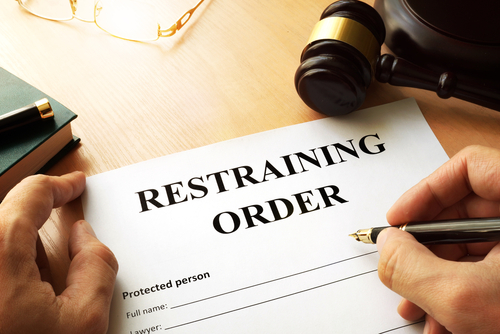
Violating a restraining order in California is usually a crime. Under Penal Code 273.6, intentionally and knowingly violating a valid protective or restraining order is generally a misdemeanor. Penalties increase if the violation causes physical injury or follows a prior conviction, and some repeat violations can be charged as felonies. A violation can also lead to changes in the order itself and affect any related family or criminal case.
Being accused of violating a restraining order can feel overwhelming, especially if you weren’t sure what the order allowed. Lias Law Firm defends people in the Santa Clarita Valley and Antelope Valley who face these allegations, reviewing the order, the evidence, and available defense options. Contact Lias Law Firm at (661) 592-9001 for a consultation.
A violation is any act that goes against the specific terms of the order. Because orders vary, start by reviewing exactly what your order requires and prohibits.
Common terms include:
Violating an enforceable restriction can have criminal consequences even if no one is injured. The applicable charge depends on the type of order and the conduct involved.
A restraining order generally applies only to the restrained person. If your order prohibits contact, the protected person calling, texting, or approaching you does not give you permission to respond or engage. Their consent does not override the court’s restrictions.
The safest response is to not reply, document the contact, and speak with an attorney. Only the court can change or end the order. An unexpected approach may be relevant to evaluating an alleged violation, but knowingly continuing prohibited contact can still expose you to charges.
To convict someone under Penal Code 273.6, prosecutors must prove beyond a reasonable doubt that a court issued a qualifying written protective order, that the defendant knew of the order, that the defendant had the ability to comply, and that the defendant intentionally violated it. An accidental encounter alone does not establish an intentional violation. What happened during and after the encounter matters.
Formal personal service is not always required. Knowledge may be established through other evidence, such as the defendant being present when the order was issued. Simply choosing not to read an order does not necessarily provide a defense.
Penalties depend on whether anyone was injured and whether you have prior convictions for violating a protective order.
A basic violation under Penal Code 273.6(a) is a misdemeanor punishable by up to one year in county jail, a fine of up to $1,000, or both. Courts that grant probation may impose additional conditions, such as counseling or completion of a batterer’s intervention program in domestic violence-related cases.
If the violation results in physical injury, Penal Code 273.6(b) provides for a fine of up to $2,000, 30 days to one year in county jail, or both. If the court imposes jail time, it may reduce or eliminate the 30-day minimum in the interest of justice after the person has served at least 48 hours, with its reasons stated on the record.
California law treats two kinds of repeat violations more seriously.
Under Penal Code 273.6(d), a new violation within seven years of a prior conviction for violating a protective order, when it involves an act of violence or a credible threat of violence, can be charged as either a misdemeanor or a felony.
Under Penal Code 273.6(e), a subsequent conviction for a violation that causes physical injury, where the new act occurred within one year of a qualifying prior conviction, can be punished as a misdemeanor or a felony. The misdemeanor penalties include a fine of up to $2,000, six months to one year in county jail, or both.
If jail is imposed, the court may reduce or eliminate the six month minimum in the interest of justice after the person has served at least 30 days, with its reasons stated on the record.
Facing a restraining order violation charge? Contact Lias Law Firm at (661) 592-9001 to discuss the allegations and potential penalties.
Violating a qualifying restraining order issued in civil or family court can result in criminal charges under Penal Code 273.6. A restraining order proceeding and a criminal prosecution can therefore run at the same time based on the same conduct.
A restraining order proceeding focuses on protecting someone going forward, and the judge decides whether to issue, extend, or modify an order. A criminal prosecution focuses on punishing a past act, and the prosecution must prove guilt beyond a reasonable doubt. An alleged violation can affect both.
It may lead a family court to extend the order or change custody terms, while separately resulting in criminal charges.
Every case depends on its facts, but common defenses include the following:
Keep following the existing order, even if you believe the accusation is false or the order is unfair. Don’t contact the protected person to explain or resolve the situation, since that can create a new violation. Preserve relevant evidence, including text messages, call logs, social media messages, emails, and anything showing where you were at the time.
Next, have an attorney review the allegations, the order, and the evidence. If the order’s terms need to change, such as for shared custody or a workplace conflict, only the court can modify them, and an attorney can help you seek those changes properly.
Lias Law Firm provides criminal defense representation in the Santa Clarita Valley and Antelope Valley, backed by more than 11 years of legal experience. Clients receive personal representation from beginning to end, with careful attention to the allegations and available defense options.
Contact Lias Law Firm at (661) 592-9001 to discuss your situation.
Facing a criminal allegation? Trust the process and rely on us to guide you every step of the way.